Publications

CAWP research and research by CAWP scholars that addresses emerging questions about American women's political participation. 

Reset Filters
  • Conference Paper
    Aug 31, 2010

    Negotiating Gender: Campaign Practitioners’ Reflections on Gender, Strategy, and Campaigns
     This paper explores the variation among and between campaign consultant perspectives, highlighting areas where gender matters more or less and recognizing the influence of consultants’ identities on their perceptions of gender and campaigns. As political actors with a growing presence and influence on campaigns, political consultants provide important insight to the campaign process and the gender dynamics therein. This insight contributes to a deeper understanding of campaigns as gendered institutions, whereby gender norms and expectations are embedded in the culture, structure, and processes of electoral politics.

  • Article
    May 1, 2010

    Life's A Party: Do Political Parties Help or Hinder Women?
    Sanbonmatsu evaluates the role of political parties in electing women to office. She argues that the history of U.S. parties indicates that women’s organizations and movements, women leaders, and women voters are the keys to making political parties a help rather than a hindrance to women’s representation.

  • Conference Paper
    Apr 22, 2010

    Entering the Mayor’s Office: Women’s Decisions to Run for Municipal Office

    This paper investigates the routes that women take to the mayor’s office in big cities (with populations of 30,000 and above) using the 2008 CAWP Mayoral Recruitment Study. The authors investigate the backgrounds of women mayors and their decisions to seek municipal office for the first time.

  • Book Chapter
    Apr 15, 2010

    Organizing American Politics, Organizing Gender
    This edited volume contains chapters by leading experts in the field of American elections and political behavior. Sanbonmatsu's chapter reviews research on gender differences in mass behavior and candidacy. She argues that future scholarship should focus on understanding the conditions under which gender structures political behavior and elections. In addition to calling for research on when gender as a social category is cued in politics, she argues that elections can create gender as a category: political behavior and elections themselves can shape beliefs about gender, instructing society about what men and women are like. 

  • Report
    Dec 1, 2009

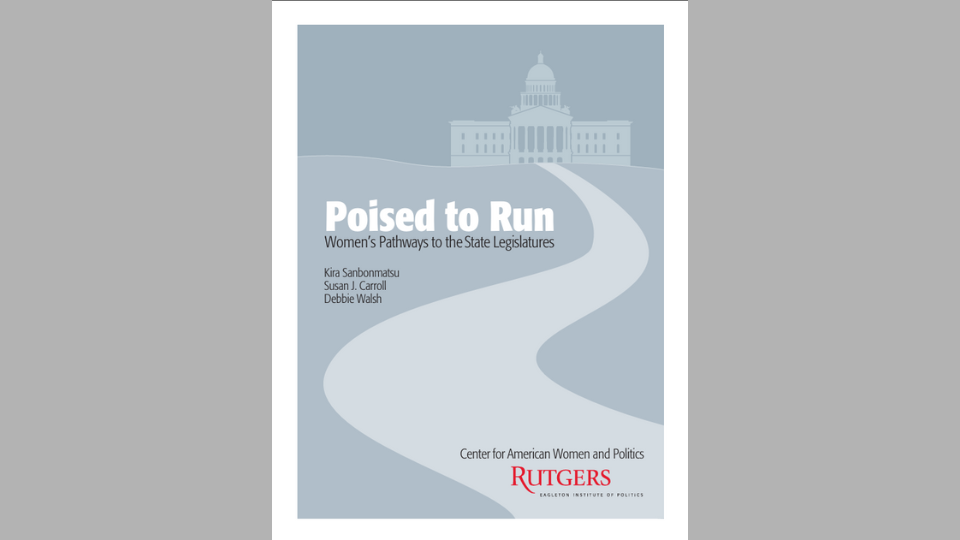
    Poised to Run: Women's Pathways to the State Legislatures
    Poised to Run presents the initial findings of a 2008 CAWP study that asked women and men in state legislatures about their routes to elective office.

  • Book Chapter
    Nov 16, 2009

    The 2008 Candidacies of Hillary Clinton and Sarah Palin: Cracking the ‘Highest, Hardest Glass Ceiling’

    This chapter examines the ways that various gender stereotypes influenced the strategies employed by the 2008 campaigns of Hillary Clinton and Sarah Palin, the media’s coverage of their campaigns, and public reactions to the candidates.  It begins with a brief historical review of women’s efforts to run for president and vice president, focusing largely on major party candidates.  It then provides short overviews of the backgrounds and accomplishments of both Clinton and Palin before turning its attention to several major gender stereotypes and the ways these stereotypes affected their campaigns.

  • Book
    Nov 16, 2009

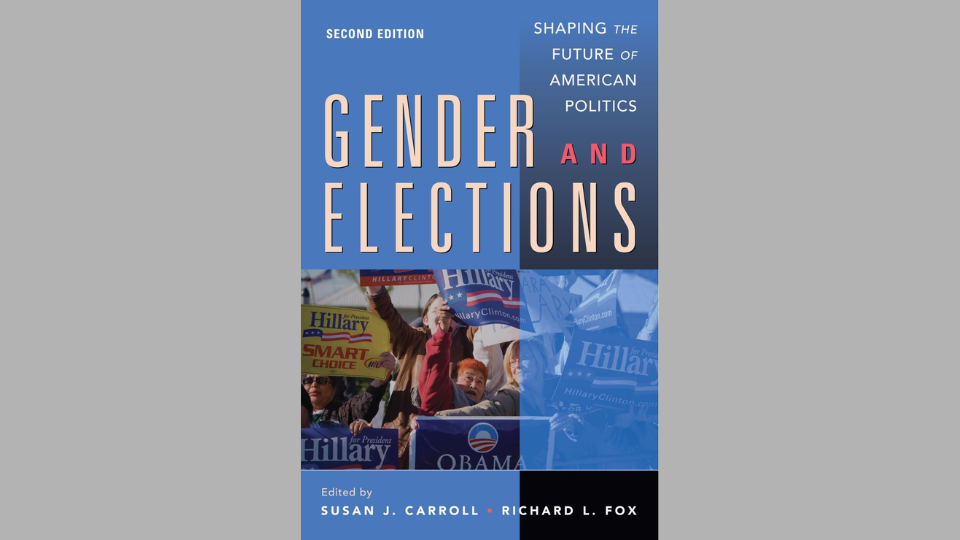
    Gender and Elections: Shaping the Future of American Politics, 2nd Edition

    The 2nd edition of this textbook describes the role of gender in the American electoral process through the 2008 elections. Tailored for courses on women and politics, elections, and gender politics, it strikes a balance between highlighting the most important developments for women as voters and candidates in the 2008 elections and providing a deeper analysis of the ways that gender has helped shape electoral politics in the United States.  Individual chapters demonstrate the importance of gender in understanding presidential elections, voter participation and turnout, voting choices, the participation of African American women, congressional elections, the support of political parties and

  • Article
    Sep 1, 2009

    Do Gender Stereotypes Transcend Party?

    Voters hold stereotypes about candidate gender and candidate party. Yet little is known about the intersection of gender and party stereotypes. This article investigates whether gender stereotypes transcend party. It considers whether gender stereotypes affect woman politicians differently by party and examine the effect of partisan identification on gender stereotypes. The authors find that the public perceives gender differences within both political parties. Thus the presence of the party cue does not preclude a role for candidate gender. However, the authors also find that the implications of gender stereotypes are somewhat different for Democratic and Republican women.

  • Conference Paper
    May 23, 2009

    Gender and Election to the State Legislatures: Then and Now

    Carroll and Sanbonmatsu compare the background characteristics and experiences of women and men state legislators over time using data from the 2008 and 1981 CAWP Recruitment Studies. 

  • Conference Paper
    Apr 5, 2009

    Gender and the Decision to Run for the State Legislature

    Carroll and Sanbonmatsu find important gender differences in the initial decision to seek state legislative office. They find that women are more likely than men to seek office because they were encouraged to run and that family and organizational support play a larger role in women’s candidacy decisions than in men’s. 

Showing 81 to 90 of 166 resources