Publications

CAWP research and research by CAWP scholars that addresses emerging questions about American women's political participation. 

Reset Filters
  • Book Chapter
    May 5, 2016

    Officeholding in the Fifty States: The Pathways Women of Color Take to Statewide Elective Executive Office
    This chapter investigates the pathways that women of color have taken to statewide elective executive office. Though underrepresented, a sufficient number of minority women have reached statewide executive office to make possible an initial analysis. The traditional scholarly focus on either race alone or gender alone has often obscured the situation of women of color. Yet, previous scholarship has shown that minority women’s access to office and pathways into office often differ from their male and White female counterparts. The chapter shows the gains of women of color, identifies patterns in their pathways to office, and explores the barriers that remain.

  • Article
    Dec 1, 2015

    Encouragement is not Enough: Addressing Social and Structural Barriers to Female Recruitment
    Invite a woman to run for office. Based on findings that women are most responsive to and reliant on encouragement in making the decision to run for office, this invitation refrain is pervasive among those seeking greater gender parity in U.S. politics. While organizations have sought to provide potential women candidates with training, information, and resources to assist them throughout the recruitment process, a focus on "invitation" can constrain a more complex and comprehensive approach to female candidate recruitment in both research and practice.

  • Book Chapter
    Dec 1, 2015

    Women and the Vote: From Enfranchisement to Influence
    This chapter provides an overview of scholarship examining the behavior and influence of women voters in United States history, from the fight for suffrage to the emergence of gender gaps in vote choice, voter preferences, and voter turnout. Dittmar exposes and explains gender differences between men and women voters, as well as among women, and discusses how those differences influence the electoral process. This chapter introduces subsequent chapters in the volume that analyze gender differences in specific issue areas such as guns and crime, abortion, and the role of government. 

  • Report
    Nov 30, 2015

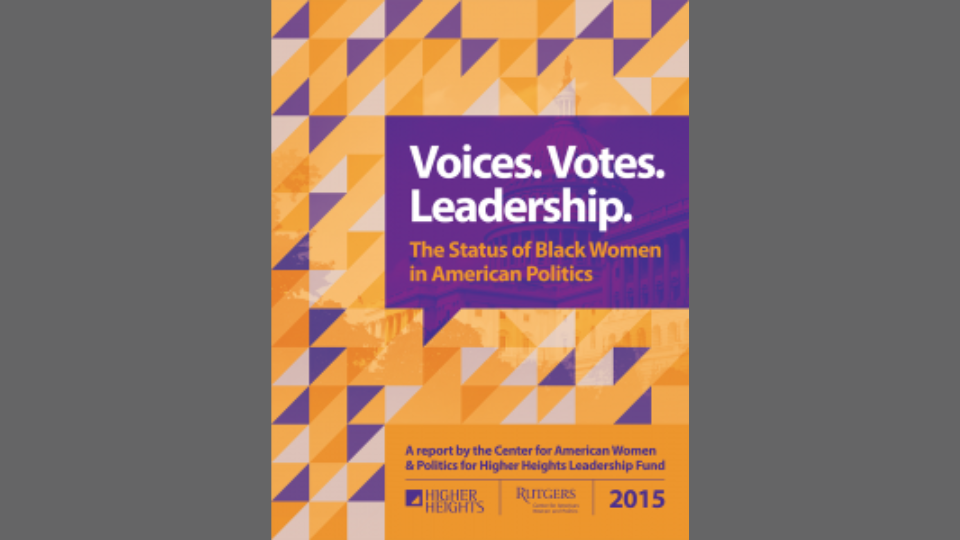
    Voices. Votes. Leadership. The Status of Black Women in American Politics 2015


    This comprehensive report provides a historical outline of Black women’s struggle for political representation. It discusses the current landscape of political leadership for Black women across the country and across levels of office, their growing political influence, and the outlook for Black women's participation in the 2016 elections. It demonstrates the need for greater engagement, recruitment, and inclusion of Black women in politics and government.

  • Article
    Sep 1, 2015

    Why Not a Woman of Color?: The Candidacies of US Women of Color for Statewide Executive Office
    This review essay focuses on the intersection of gender and race in statewide executive officeholding. The author argues that scholarly neglect of this topic risks naturalizing the dearth of women of color in statewide executive positions, sending the message that it is understandable that women lack access to those offices and/or that such offices aren’t realistically obtainable. Using data from the Center for American Women and Politics, the author examines the status of women of color in statewide offices and state and party patterns in their presence as candidates and officeholders. Directions for future research are suggested. 

  • Article
    May 7, 2015

    Electing Women of Color: The Role of Campaign Trainings
    The increasing racial diversity of women in the United States makes the underrepresentation of women of color in politics an important area for research. To better understand the reasons for the underrepresentation of women of color and how more women of color might be elected in the future, this article presents a case study of a unique campaign training program designed for women of color. The program is the Center for American Women and Politics’ (CAWP) New Jersey Ready to Run® Diversity Initiative. Campaign trainings have proliferated in recent years and seem to play a disproportionate role in women’s election to office. By examining perceptions of the barriers facing women of color and

  • Report
    Apr 5, 2015

    A National Call to Action: Teaching Young People About Women's Public Leadership and Promoting Public Leadership for Girls
    This report is an overview of the proceedings and outcomes of The White House Conference on Girls’ Leadership and Civic Education, convened by the White House, the U.S. Department of Education, and the Center for American Women and Politics. The conference explored the roots of the significant gender gap in public leadership and sought concrete, immediate ways to change how we educate, entertain and engage young people in order to expand the image of who can and does lead.

  • Book
    Jan 1, 2015

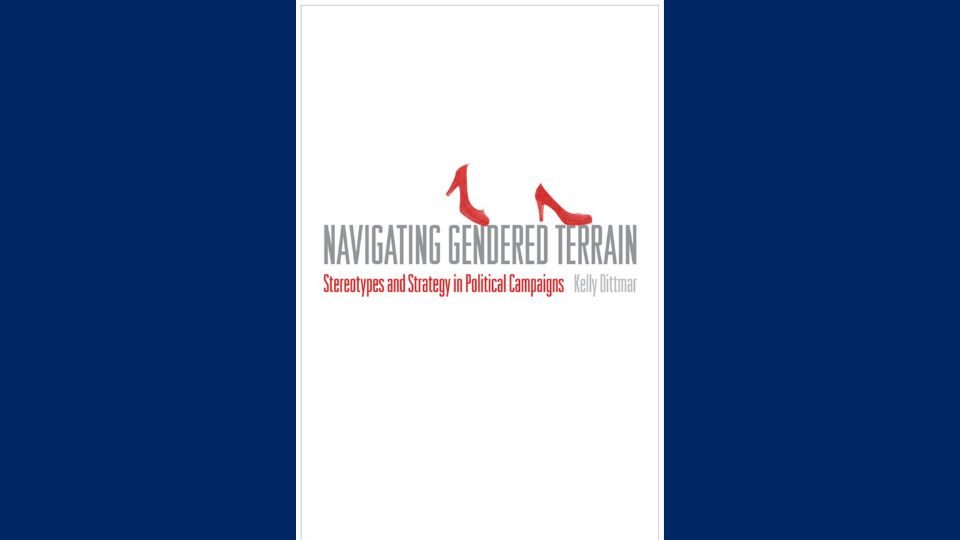
    Navigating Gendered Terrain: Stereotypes and Strategy in Political Campaigns

    From the presidential level down, men and women who run for political office confront different electoral realities. In her probing study, Navigating Gendered Terrain, Kelly Dittmar investigates how gender influences the campaign strategy and behavior of candidates today. Concurrently, she shows how candidates' strategic and tactical decisions can influence the gendered nature of campaign institutions.

  • Report
    Dec 1, 2014

    The Status of Black Women in American Politics 2014

    This comprehensive report provides a historical outline of black women’s struggle for political representation and discusses the current landscape of political leadership for black women across the country as well as their growing political influence. It demonstrates the need for greater engagement, recruitment, and inclusion of black women in politics and government.

  • Report
    Jul 15, 2014

    The Gender Gap: Gender Differences in Vote Choice and Political Orientations

    Women and men are political actors with distinct political preferences. These differences – or gender gaps – emerged in the 1980s and have been persistent since then in vote choice, party identification, and presidential performance ratings. In its latest edition of "A Closer Look," CAWP highlights what we know about gender gaps and asks key questions about potential gender differences in voting in 2014.

Showing 51 to 60 of 168 resources